Fun Bite
Sauerkraut
By Hannah2 min read
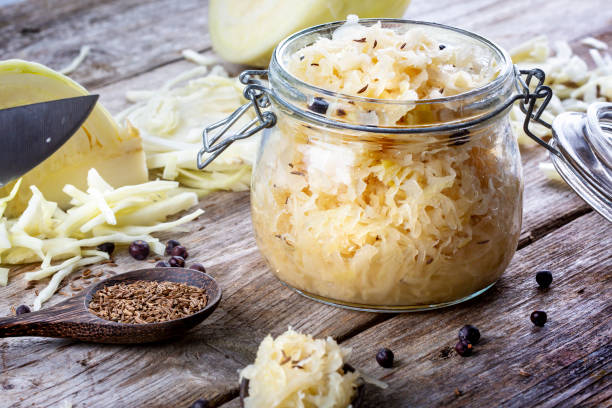
Sauerkraut’s story is one of resilience, innovation, and flavor. Imagine over 2,000 years ago in ancient China, where laborers toiling on the Great Wall needed a way to sustain themselves with limited resources. Their solution? A humble mixture of shredded cabbage and rice, which, when stored in rice wine, transformed into a tangy, fermented delight. I love thinking about how these early food pioneers stumbled upon sauerkraut almost by accident, simply trying to extend the life of their food. Yet, what they created became the ancestor of a dish that has since crossed continents and centuries to land on plates around the world. The journey from China to Europe, particularly Germany, turned sauerkraut into a beloved cultural icon. While today many of us associate sauerkraut with bratwursts, Reuben sandwiches, or as a side to hearty winter dishes, it’s remarkable to think that this dish was born out of sheer necessity. And now, it’s a nutritional powerhouse! Personally, I love sauerkraut not just for its taste but for its benefits. Loaded with fiber, iron, and vitamin C, it offers a range of nutrients while also supporting gut health with probiotics. These tiny, beneficial bacteria work wonders on our digestion and even play a role in our mental well-being. The gut-brain connection is fascinating, isn’t it? Eating something as simple as sauerkraut could potentially help reduce stress and boost mood, and that’s a pretty incredible return for such a simple food. And let’s talk about how sauerkraut has caught on in the U.S., too. Did you know that Americans consume over 380 million pounds of sauerkraut each year? That’s nearly as much as Germany! Personally, I think it’s a testament to how timeless and versatile this dish is—whether as a topping, a side, or just straight out of the jar. I love seeing how foods like sauerkraut bring people together through a shared love for flavor and a curiosity about where our food comes from. Every bite is a little taste of history, and with all those probiotics, it’s like a gift to our bodies, too. So, next time you have some, take a moment to appreciate the long journey it took to get here, from ancient China to your plate.