Fun Bite
Feijoada
By Hannah3 min read
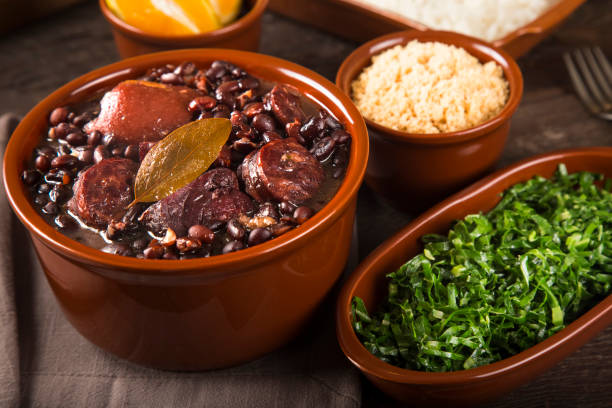
Feijoada is a dish steeped in history, with origins that date back centuries. While the most commonly accepted story traces feijoada to the African slaves in Brazil, other theories suggest it evolved from European culinary traditions, particularly from the Portuguese settlers. These settlers introduced hearty, filling stews that were practical and inexpensive. Feijoada, however, took on a uniquely Brazilian identity, blending ingredients and cooking methods from different cultures to become a defining dish of the country. The word *feijoada* is derived from the Portuguese word *feijão*, meaning "bean," a key ingredient in the dish. Beans are a staple in many cuisines, but in Brazil, they are transformed into a stew that symbolizes both the country’s diversity and its resilience. By the 19th century, feijoada had evolved into a beloved dish, especially in Rio de Janeiro, where it became a social tradition. Over time, it spread across Brazil, with regional variations reflecting local ingredients and flavors. While the classic version uses black beans and various cuts of pork, each region has put its own spin on the dish, telling its own story of adaptation and resourcefulness. Today, feijoada is more than just a meal—it's a symbol of Brazilian culture and communal dining. The dish is traditionally served with sides like collard greens (couve), white rice, orange slices, and farofa (toasted manioc flour). The oranges provide a refreshing contrast to the rich, smoky flavors of the stew, balancing the meal perfectly. Feijoada is also a social event, often enjoyed on Wednesdays and Saturdays. The weekend version, called *feijoada completa*, is an extravagant feast, where families and friends gather for a leisurely afternoon of eating and socializing, often followed by a well-earned siesta. It’s more than just food—it’s a celebration of community and a reminder to slow down and savor life. From a health perspective, feijoada has a surprisingly strong nutritional profile. The black beans, a central ingredient, are packed with plant-based protein, fiber, and antioxidants, as well as essential minerals like iron, magnesium, and folate, all of which support overall health and energy. While traditional feijoada might use fattier cuts of meat, lighter versions often substitute leaner cuts, allowing for indulgence without compromising on nutrition. Interestingly, while feijoada is synonymous with Brazilian cuisine, Portugal has its own version. Portuguese feijoada typically uses white or red beans and often incorporates ingredients like cabbage and carrots alongside the pork. Though both dishes share the same name, their flavors and presentations reflect the distinct cultural influences of their regions. Feijoada has also spread beyond Brazil, gaining popularity in countries with large Brazilian communities, such as the United States and parts of Europe. In Lisbon, you might even find a Brazilian-style feijoada served alongside traditional Portuguese dishes, showcasing how the dish has evolved and traveled, much like the country that created it.