Fun Bite
Romanian eggplant salad
By Hannah3 min read
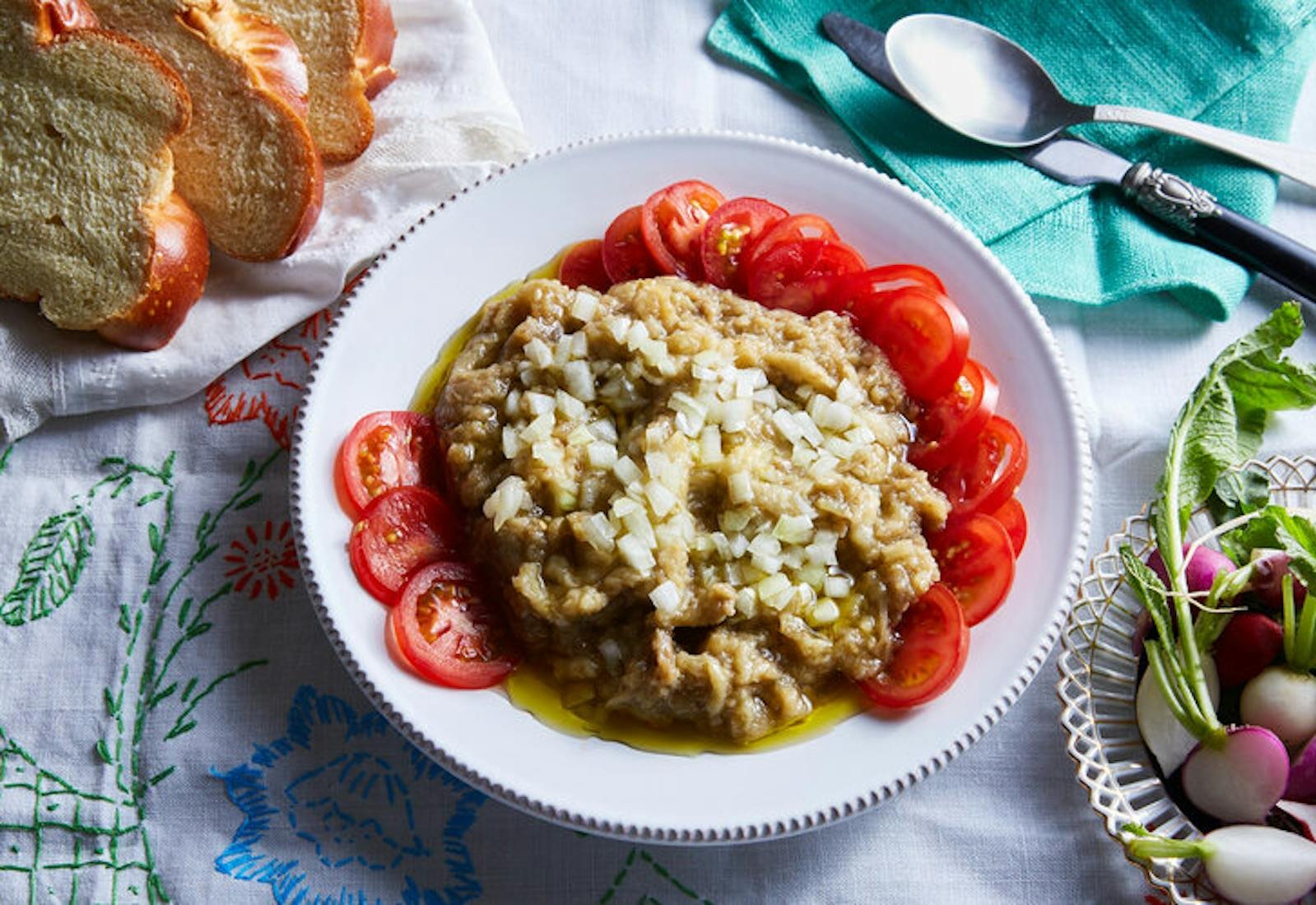
Eggplant salad, or salată de vinete in Romania, is a cherished dish that celebrates Eastern European culinary traditions. This Romanian version features grilled, peeled, and finely chopped eggplants, often combined with sunflower oil and chopped onions. The preparation involves grilling the eggplants over an open flame until they develop a charred, black ash crust. After cooling, the crust is scraped off, and the soft eggplant flesh is mashed on a wooden platter using a blunt wooden cleaver, as it's believed that a metal knife can darken the flesh. The mash is then mixed with sunflower oil, onions, salt, and sometimes garlic and ground pepper for added flavor. A dash of lemon juice is often added at the end, and the dish may be garnished with tomato slices, making it a flavorful addition to any meal. Eggplant salads are popular across various global cuisines. In the Middle East, baba ghanoush is a well-known Levantine dish made by mashing grilled eggplant with tahini, garlic, and olive oil, resulting in a smoky, creamy dip. The name "baba ghanoush" comes from Arabic, with "baba" meaning "father" and "ghanoush" meaning "pampered," reflecting the dish's cherished status. A spicier version, mutabbal, includes similar ingredients but adds extra spices, appealing to those who enjoy bolder flavors. In Armenia, a similar dish is called mutabal and often features cumin as a key ingredient. In Georgia, badrijnis khizilala, or "aubergine caviar," is made from fried and chopped eggplants mixed with onions, garlic, pomegranate, and fresh herbs, creating a flavorful and textured dish. In Israel, the traditional version, salat ḥatzilim, is made with mashed grilled eggplants, tahini, olive oil, lemon, garlic, and parsley, while a variation with mayonnaise is also popular. Greek cuisine offers melitzanosalata (μελιτζανοσαλάτα), a salad made from grilled eggplant, olive oil, lemon juice, and garlic, sometimes garnished with feta cheese or olives. This dish reflects the Mediterranean's focus on fresh, simple ingredients. Turkish cuisine features İmam bayıldı, an eggplant stew made with olive oil, onions, and tomatoes. The name, which means "the imam fainted," comes from a legend suggesting the dish's richness caused an imam to swoon. Macedonian malidzano is a spread made from puréed eggplants, sirenje cheese, walnuts, and spices, often served as an appetizer with bread. Similar dishes are also made in other Western Balkan countries using green peppers and eggplant. In Eastern Europe, baklažannaja ikra (aubergine caviar) is a popular appetizer in Russia and Ukraine, especially in Odesa, where it is sometimes enhanced with tomatoes. Another popular eggplant salad in Russia, influenced by Korean cuisine, is he iz baklažanov, where julienned cooked eggplants are mixed with vinegar and set aside to cure before serving. In Bulgaria, kyopolou is a variation made from roasted eggplants mixed with garlic and olive oil, sometimes served with yogurt, highlighting the region's love for smoky flavors and creamy textures. Overall, eggplant salads reflect a diverse culinary heritage, with each region offering its own unique spin on this versatile vegetable.