Fun Bite
Chicken Tagine
By Hannah2 min read
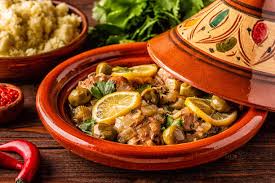
The tajine, both the cooking vessel and the dish itself, holds a deep historical and cultural significance that spans centuries and continents. In the 1990s, Dr. Vivien Swan discovered pottery fragments from Scotland's Antonine Wall that closely resembled North African ceramics, including a casserole-style dish thought to resemble an early version of the modern tajine. Similarly, archaeological finds in Tunisia show that fragments of tajines were present in ancient Numidian pottery. These discoveries suggest that the roots of the tajine go back even further, possibly to the Abbasid era during the time of Harun al-Rashid, with descriptions of cooking methods resembling the tajine appearing in the *One Thousand and One Nights* from the 9th century. Today, the tajine is a signature cooking tool in North Africa and the Middle East. It is used in different cooking styles, each with unique flavor profiles. In the qidra method, clarified butter and pureed onion are used to provide richness and aroma to the stew, while the muqawlli style utilizes olive oil to intensify the dish’s flavors. Food historian Gil Marks has noted that the distinctive two-piece tajine pot, often made of red clay, likely originated from the Anti-Atlas region of Morocco, where it was designed for slow, flavorful cooking that maximizes the ingredients' natural tastes. The art of making tajine pottery has deep cultural roots in North Africa. French ethnographers in the 19th century documented the intricate pottery work of Kabyle women in Algeria, who used natural pigments and varnishes to create elaborate designs on the clay. Explorers like Oscar Mac Carthy also described encountering tajines and similar clay vessels in daily use across Algeria and Tunisia, underscoring the enduring importance of the tajine in the region's culinary culture. The tajine continues to be not only a staple of North African kitchens but a symbol of the rich history and craft traditions that continue to influence modern cooking techniques.